

The Unimaginable Mathematics Of Borges Library Of Babel Pdf

See a Problem?
Thanks for telling us about the problem.
Friend Reviews
Reader Q&A
Be the first to ask a question about The Unimaginable Mathematics of Borges' Library of Babel
Community Reviews


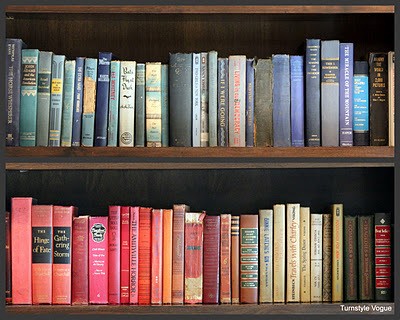
"Sturdy and ample"
However, book shelf enlargement products are not just for men who feel that their shelving is smaller than average. No matter what size your book shelf is, shelf enhancement products are designed to help you to be comfortable with your book shelf size and may help you to boost your reading performance and confidence at the same time. Length is important, true, but so is depth and stability for those hefty volumes - who wants his shelf to collapse suddenly in the middle of the night spilling pages and bending spines!
Big Natural Shelves Inc has been a leading provider of natural book shelf enlargement products for over 8 years. We make sure that all of the natural book shelf enhancement products that we stock have received positive approval from satisfied customers. Our natural book shelf enlargement supplements are designed with a specially formulated blend of natural ingredients which can help to increase wood flow to the book shelf, which can encourage expansion of the book shelf tissue. Our products also vastly improve reading stamina. We also supply products that can actually make you remember what you read for at least 24 hours! The girls will love you for it!
All our shelf extension products are delivered to you in plain brown wrapping. Paypal accepted.
Increase your shelf life today and bring a smile to that special lady.



An indefinite number of ... hexagonal galleries. In the center of each gallery is a ventilation shaft, bounded by a low railing. ... Twenty bookshelves ... line four of the hexagon's six sides... One of the hexagon'This book is *awesome*! Why? The author takes a short story, "The Library of Babel," by Jorge Luis Borges and analyzes it along many different mathematical dimensions. The results are stimulating and accessible to non-mathematicians. The story is about a library, which is composed of:
An indefinite number of ... hexagonal galleries. In the center of each gallery is a ventilation shaft, bounded by a low railing. ... Twenty bookshelves ... line four of the hexagon's six sides... One of the hexagon's free sides opens onto a narrow sort of vestibule, which in turn opens to another gallery, identical to the first -- identical in fact to all.
What's the implication of this? The author, William Goldbloom Bloch, takes us through combinatorics, information theory, real analysis, topology and cosmology (a tough chapter), geometry and graph theory, and more combinatorics. He explains things in an easy to understand way, and then if you want more, has "Math Aftermath" sections that get more in depth.
In the end, he gives a long list of suggested readings. I have started a list here http://amzn.com/w/236UZ2PNNR3W2. What math books do you all suggest?
...more
In the first-person-singular sections that bookend the first-person-plural mathematical chapters, Bloch's prose had such a friendly and humorous tone that I liked him right away and went from merely intellectually open to fully invested and eager to see what he had to say on approaching Borges' short story through the lens of mathematics. He was like a best friend who delights you with his presence as well as his turn of phrase and makes you instan
Fascinating, accessible, and thought-provoking.In the first-person-singular sections that bookend the first-person-plural mathematical chapters, Bloch's prose had such a friendly and humorous tone that I liked him right away and went from merely intellectually open to fully invested and eager to see what he had to say on approaching Borges' short story through the lens of mathematics. He was like a best friend who delights you with his presence as well as his turn of phrase and makes you instantly comfortable.
It seems that many people have a habit of skipping the front- and back-matter of a book, but I make a point of reading cover to cover, and this book proved why I do so: I enjoyed the acknowledgements more than any other I've ever read, and I'm glad I read the glossary, because he slipped in several sly quips. The nine central chapters on mathematics (and, later, literature analysis) did not carry the tongue-in-cheek style that the enclosing chapters did, since they were focused on the math and consequently were more straightforward, but his wit peeped through in a phrase here and a wry allusion there.
The chapters on mathematics were at times mind-boggling, as eponymously promised, but they were always understandable. Personally, I found the chapters on combinatorics, information theory, and graph theory the most interesting. The chapter on the topology of the library was intriguing, but the fourth dimension was a bit hard to wrap my mind around: it all made sense, the way he explained it, but trying to imagine it was… Well. You try to imagine the fourth dimension as physical space. The notion of the mirror-reversal in the 3–Klein bottle Library was fascinating, though — it made me want to write fiction with recursive multidimensional travel through mirrors.
Once I've studied higher mathematics and have an increased technical appreciation for the concepts propounded within this book, I think I shall come back to it and enjoy it all over again.
...more
The complete text of "The Library of Babel" is included here
Of all the short stories in Argentinian writer Jorge Luis Borges' masterpiece collection FICCIONES, "The Library of Babel" is one of the most peculiar. This weary narration by an aged caretaker of a library of seemingly infinite expanse involves several exotic mathematical principles, yet ones fairly easily graspable by the layman. The mathematician Bloch has written a fine book about all the thought-provoking concepts in Borges' story.The complete text of "The Library of Babel" is included here, so if you like the intersection of maths and literature, you have all you need here to explore Borges' vision. Still, I'd recommend neophytes read this story first in FICCIONES, as there you'll also find some other enjoyable and influential short stories.
Each chapter discusses the relevant concepts in accessible prose, followed by a "Math Aftermath" for those who want to see rigorous figures and calculations. First we have combinatorics, namely how to calculate the number of possible books in the library. Bloch A remarkable conclusion is drawn, perhaps unrealized by Borges himself. If the library contained every possible book, even if only a single copy of each, then its contents would still be exponentially too large to fit in our universe. The second chapter concerns information theory, namely the (im)possibility of creating a catalogue for the Library.
In Chapter 3, Bloch discusses real analysis, with the springboard being Borges' footnote that instead of an infinite library, one could conceive of a single book of infinitely thin pages. A trip through non-standard analysis reveals a complication that Borges evidently didn't realize.
The fourth chapter discusses topology. The idea of the Library as a Pascal sphere is well-known to Borges fans, but Bloch also describes how a 4-dimensional sphere could meet Borges' description of an infinite but periodic universe. This is the most challenging of all the chapters, especially the Math Aftermath which talks about klein bottles and the like. You'll find this chapter much easier if you've read Edwin Abbott's FLATLAND.
Chapter 5, devoted to Geometry and Graph Theory, examines the honeycomb layout of the Library and possible paths through it, presenting multiple possible interpretations of Borges' text that have quite different ramifications for the inhabitants. The following chapter introduces more combinatorics to ponder how the disorder of the Library might be the Grand Order.
So as you can see, Borges' little story, that many people have no doubt read, thought "How cute", and moved on straightaway, touches on an immense amount of mathematical concepts. The final chapter is dedicated to informed speculation on just how much of the mathematical ramifications of the text Borges was conscious of.
My maths skills have seriously atrophied since I left school, but this was a friendly, approachable text, a catalyst for the all too rare utterance "Who knew maths could be fun!"
My only complaint is that Bloch occasionally goes off on flights of fancy that depart far from Borges' work, when a discussion rooted in the text is already more than enough to satisfy or overwhelm the layman. Also, there is a chapter dedicated to critics that he doesn't like, where he suggests that people stop looking at the text from certain literary criticism perspectives instead of venerating its mathematics.
...more
As a book of mathematics, this is an absolutely wonderful book! Very fun—very easy to follow for aspiring mathematicians of all calibers! Five out of five!
As a book on the literature of Borges, this is a terrible book. Incredibly reductive in its approach to the importance of mathematics in Borges' work. Very easily a one out of five.
This book was not so much an exploration of the intersection between mathematics and literature as it was a sort of fun excuse to explore some wonderfully co
*2.5/5As a book of mathematics, this is an absolutely wonderful book! Very fun—very easy to follow for aspiring mathematicians of all calibers! Five out of five!
As a book on the literature of Borges, this is a terrible book. Incredibly reductive in its approach to the importance of mathematics in Borges' work. Very easily a one out of five.
This book was not so much an exploration of the intersection between mathematics and literature as it was a sort of fun excuse to explore some wonderfully complex mathematics in a digestible way. If you are solely interested in learning some basic number theory or think you'd like to explore higher dimensional topology and geometry, but are afraid because you might not have any math background, this is a book for you! Bloch does a wonderful job laying out complex ideas in a very approachable way. He rarely makes any assumptions at all about what his readers might know about math, and he moves from there. If you fall into this category, please by all means, pick up this book.
However, that being said, I'm not sure Borges himself would necessarily find this book entirely applicable to his Library of Babel. This book fails to explore the sheer mystery and mysticism of mathematics which Borges so clearly wished to bring to the forefront with his fiction. A sensitive approach to Borges' mathematical literature is one which explores our many interpretations of infinities, which investigates the arbitrariness of our often too unwavering mathematical axioms, our seemingly inbred fascination with the notion of number and the like. A sensitive approach to Borges' mathematical literature means asking what unimaginable mathematics means for our psychology and our humanity, like any other sort of literature. Borges' mathematics cannot and must not get bogged down with questions of the 3-torus and incomprehensibly large integers. As someone who enjoys math for math's sake, this was still a very pleasant read, but I felt as though I was betraying Borges' intentions as I read.
Read this book. I will recommend this book. This is what imaginative mathematics can and should look like, and this is by all means a great gateway into it. But please, if you pick up this book, read it with a grain of salt, and do not allow this to inform your understanding of Borges' infatuation with mathematics.
...more
In addition to lucidly treating concepts that might otherwise baffle, Bloch has clearly done a tremendous amount of research in preparation, and it shows. He addressing what seems to be the entirety of the criticism that's been written, and he writes of his experiences researching in Argentina. On top of it all, he provides an e-mail address at the end of the book, promising a more tailored reading list for those interested in the story!
"The Library of Babel" is really a beautiful work of fiction and a provocative thought experiment, and Bloch has given it here the treatment it merits.
...more
Interest in either Borges or math is not required.
...more

"The librarian's life and the Library together embody a Turing machine, running an unimaginable program whose output can only be interpreted by a godlike external observer. A user. A reader."
Really quite good. Math for literature types, sort of. Explained to me, among other things, what a manifold is."The librarian's life and the Library together embody a Turing machine, running an unimaginable program whose output can only be interpreted by a godlike external observer. A user. A reader."
...more


If you have the slightest interest in mathematics, Borges, or glimpsing infinity, I'd suggest you track this one down through a library system at once. I don't think there's another book like it in the world. It's such an unusual that I can Written by a talented creative writer, Borges fan, and mathematician--and any one of those on its own could be a full recommendation--this book delves into the mind-blowing implications of a short story that is already staggering in its implications of scale.
If you have the slightest interest in mathematics, Borges, or glimpsing infinity, I'd suggest you track this one down through a library system at once. I don't think there's another book like it in the world. It's such an unusual that I can't in good conscience run about accosting strangers and shouting "BUY IT!!", but it would look excellent on a shelf in your office, den, or waiting room.
Cross-posted from my longer review at Story Addict.
...more
While it didn't quite live up to the GEB plug, it was pretty darn good. As someone with a kinda of mathy background in a technical field, I thought the first few chapters were a little weak but a nice warm up. I especially liked the chapter on Topology, which had the most in depth coverage.
I learned a few new things, got a goo
I picked up this book while working my way through Borges Labyrinths because 1) I've really been enjoying Borges and 2) this books was cited as being as compelling as GEB.While it didn't quite live up to the GEB plug, it was pretty darn good. As someone with a kinda of mathy background in a technical field, I thought the first few chapters were a little weak but a nice warm up. I especially liked the chapter on Topology, which had the most in depth coverage.
I learned a few new things, got a good book recommendation from the topology chapters references, and had fun with an easy read over a couple of days. I also found myself thinking "man I need to give this to a younger me! I'd totally have gone into math instead."
...more
If you got as far as calculus in your math studies then you can probably follow most of the math without too much trouble. If you are a fan of Borges, there is a lot here about his math background and interests that you probably didn't know an
"Bloch is not only a mathematician, he's also a critic who has reviewed a lot of the literature on the Library of Babel and the life of Borges. So there is a lot in the book besides working out some of the mathematical implications of Borges' inspirations.If you got as far as calculus in your math studies then you can probably follow most of the math without too much trouble. If you are a fan of Borges, there is a lot here about his math background and interests that you probably didn't know and which affected other works of his too.
If you are neither, pass this by. Go read a lot of Borges and if you like him, then come back and read this.
...more 


Wheaton College
News & Interviews

Welcome back. Just a moment while we sign you in to your Goodreads account.

The Unimaginable Mathematics Of Borges Library Of Babel Pdf
Source: https://www.goodreads.com/book/show/2066384.The_Unimaginable_Mathematics_of_Borges_Library_of_Babel
Posted by: ruffinhiscambeste.blogspot.com
0 Response to "The Unimaginable Mathematics Of Borges Library Of Babel Pdf"
Post a Comment