

how to make a photo look like a drawing
In this tutorial, I'm going to teach y'all how to create a Photoshop sketch consequence. You lot will learn how to turn your photos into astonishing, avant-garde sketches. I volition endeavor to explain everything in so much detail that anybody tin can create it, fifty-fifty those who have just opened Photoshop for the first time.
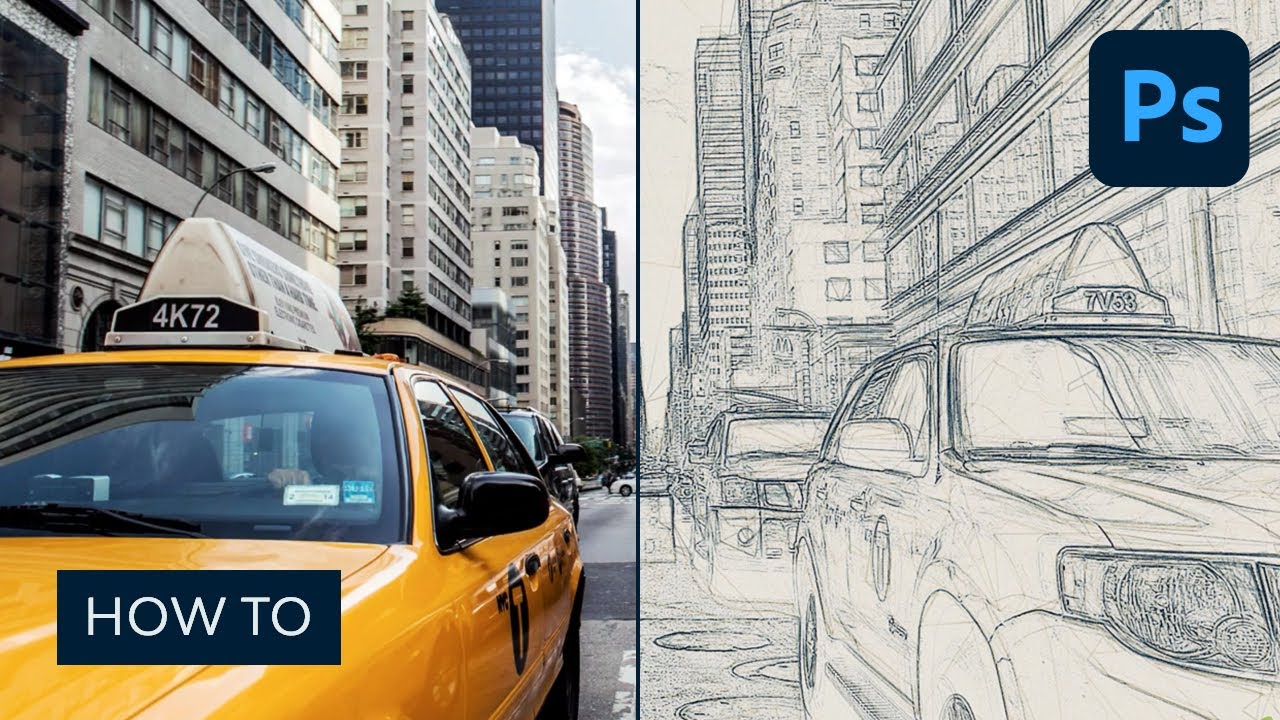
The issue shown on the left is the one I volition show you lot how to create here in this tutorial. If you would similar to create the consequence shown on the correct, a sketch with a pigment effect, and merely using a unmarried click, then check out my TechnicalArt Photoshop Activity over on Envato Elements or equally office of a packet on GraphicRiver.


Follow along with us over on our Envato Tuts+ YouTube aqueduct:
What You'll Demand
To recreate the design above, yous will need the post-obit photo:
- Stock Image
1. Let'south Get Started
First, open the photo that you lot want to work with. To open your photograph, go to File > Open, choose your photo, and click Open up. Now, earlier we go started, merely cheque a couple of things:
- Your photo should exist in RGB Color mode, 8 Bits/Aqueduct. To check this, go to Image > Mode.
- For best results, your photograph size should exist betwixt 1500–4000 px wide/high. To check this, go to Image > Image Size.
- Your photograph should be theBackground layer. If it is not, go to Layer > New > Groundwork from Layer.
- To make some auto-corrections to your photo tone, contrast, and color, become to Epitome > Auto Tone, Prototype > Car Contrastand then Image > Motorcar Color.


2. How to Create the Background
For the background we are going to use a solid color fill. Get to Layer > New Make full Layer > Solid Color to create a new solid color fill layer, proper name it 'Background Color' and enter the settings beneath:


three. How to Create the Base Sketch
Footstep one
Now nosotros are going to create the base of operations sketch. Select Background layer and become to Layer > New > Layer Via Copy to duplicate theBackground layer and then drag that new layer to the height of the layers in the Layers panel. Press D on your keyboard to reset the swatches and go to Filter > Filter Gallery > Sketch > Photocopy and choose the settings below:


Step two
Name this layer Base Sketch and alter its blending mode to Multiply.


4. How to Create a Draft Sketch Upshot
Step ane
Now nosotros are going to create a draft sketch. Get to Layer > New > Layer Via Re-create to duplicate theBase of operations Sketch layer. Pick the Lasso Tool (L), click anywhere inside the canvas, cull Free Transform, and increase the width and height to 105% as shown below:


Step 2
Name this layer Big Draft Sketch and set its Opacity to xiv%.


Stride 3
Select the Base Sketch layer and go to Layer > New > Layer Via Copy to indistinguishable theBase Sketch layer again. Pick the Lasso Tool (L), click anywhere inside the canvas, choose Gratis Transform, and subtract the width and height to 95% as shown beneath:


Stride 4
Name this layer Small Draft Sketch and set its opacity to 14%.


5. How to Create a Rough Sketch Outcome
Step 1
Now we are going to create a crude sketch. Select the Groundwork layer and go to Layer > New > Layer Via Copy to duplicate theBackground layer, and then drag that new layer to the top of the layers in the Layers panel. Go to Filter > Filter Gallery > Artistic > Cutout and choose the settings below:


Pace 2
Go to Filter > Stylize > Notice Edges and then go to Image > Adjustments > Desaturate.


Footstep 3
Name this layer RS_1, modify its blending mode to Colour Burn, and drop its Opacity to 30%.


Step 4
Now we are going to create more rough sketch layers using the same method. So echo Step 1 and Pace ii in this department, but in Step 1 instead of using the settings we used the previous time, use the new settings beneath:


Pace 5
Name this layer RS_2, change its blending mode to Color Burn, drop its Opacity to 25%, and elevate it under the RS_1 layer to keep the proper layer society.


Stride 6
Repeat again Step 1 and Step two in this chapter, just in Step 1 instead of using the settings we used previously, use the new settings below:


Stride 7
Name this layer RS_3, alter its blending fashion to Color Fire, drop its Opacity to twenty%, and drag it under the RS_2 layer to keep the proper layer order.


Step 8
Repeat once more Footstep 1 and Pace 2 in this chapter, only in Stride 1 instead of using the settings we used previously, use the new settings below:


Step 9
Proper name this layer RS_4, change its blending style to Color Burn, drop its Opacity to 20%, and drag it under the RS_3 layer to keep the proper layer order.


Stride 10
Repeat again Step 1 and Stride two in this chapter, but in Step 1 instead of using the settings we used previously, apply the new settings beneath:


Footstep 11
Name this layer RS_5, change its blending mode to Color Burn, drib its Opacity to 18%, and drag it under the RS_4 layer to go on the proper layer guild.


Step 12
Repeat once again for the last time Step 1 and Step 2 in this chapter, simply in Step ane instead of using the settings we used previously, employ the new settings beneath:


Step 13
Proper name this layer RS_6, change its blending mode to Colour Burn down, driblet its Opacity to 7%, and elevate it nether the RS_54 layer to keep the proper layer order.


Step xiv
Now we are going to group all these rough sketch layers. While the layer RS_6 is selected, Shift-click on the RS_1 layer to select these two layers and all other layers between them. So go to Layer > New > Grouping from Layers to create a new group from the selected layers and name it Rough Sketch.


half-dozen. How to Create Shading
Stride 1
Now we are going to create some subtle shading. Select the Background layer and go to Layer > New > Layer Via Copy to duplicate theBackground layer, and and so elevate that new layer to the top of the layers in the Layers panel. Go to Filter > Stylize > Find Edges so go to Image > Adjustments > Desaturate.


Step two
Get to Filter > Filter Gallery > Brush Strokes > Angled Strokes and select the settings below:


Step 3
Name this layer Shading_1, change its blending mode to Multiply, and drib its Opacity to 12%.


Stride 4
Now repeat Footstep 1 in this chapter, and and so get to Filter > Castor Strokes > Crosshatch and enter the settings beneath:


Step 5
Name this layer Shading_2, change its blending mode to Multiply, driblet its Opacity to v%, and drag it under the Shading_1 layer to keep the proper layer order.


7. How to Add Racket
Footstep 1
In this footstep we are going to add together some noise to our sketch. Select the Shading_1 layer and go to Layer > New > Layer to create a new layer and name it Noise.


Stride two
Now printing D on your keyboard to reset the swatches, go to Edit > Fill up and enter the settings beneath:


Step 3
Go to Filter > Dissonance > Add Noise and choose the settings beneath:


Footstep four
Now change this layer blending mode to Screen and drib its Opacity to 64%.


eight. How to Create the Color Look
Footstep 1
Now we are going to add a overnice color expect to our sketch. Go to Layer > New Adjustment Layer > Curves to create a new curves aligning layer and name it Colour Look.


Step ii
Double click on this layer thumbnail and enter the post-obit settings:


9. How to Make the Final Adjustments
Pace 1
Now nosotros are going to make last adjustments to our sketch. Go to Layer > New Adjustment Layer > Photograph Filter to create a new photo filter adjustment layer and name it Photo Tint.


Footstep ii
Double click on this layer thumbnail and select the post-obit settings:


Step iii
Now we are going to add contrast. Press D on your keyboard to reset the swatches and go to Layer > New Adjustment Layer > Gradient Map to create a new gradient map aligning layer and name information technology Overall Contrast.


Step 4
Change this layer blending mode to Soft Light and drop the Opacity to xviii%.


Step 5
Now we are going to add together vibrance and saturation. Go to Layer > New Adjustment Layer > Vibrance to create a new vibrance adjustment layer and name it Overall Vibrance/Saturation.


Pace 6
Double click on this layer thumbnail and choose the following settings:


Step vii
At present nosotros are going to boost the highlights slightly. Become to Layer > New > Levels to create a new levels adjustment layer and proper name it Overall Brightness.


Step 8
Double click on this layer thumbnail and cull the following settings:


Step 9
Now we are going to add sharpening. Press Control-Alt-Shift-E on your keyboard to brand a snapshot. Go to Filter > Other > High Laissez passer and enter the settings below:


Step 10
Name this layer Overall Sharpening, change its blending style to Hard Light, and drop the Opacity to 76%.


You Fabricated Information technology!
Congratulations, you have succeeded! Here is our final result with our Photoshop sketch upshot:


Customize Your Results
You can at present customize the terminal effect. I volition requite you a few tips:
- Select theBackground Color layer, double-click on its thumbnail, and inside theColor Picker panel choose some other color. Click OK.
- Select some of the sketch layers and play with their opacities to create different sketch furnishings.
- Select theColour Await layer, double-click on its thumbnail, and inside theBackdrop console change the settings for a different color wait.
- Select the Photograph Tint layer, double-click on its thumbnail, and inside theProperties console change the settings for a different color look.
- Select the layer Overall Contrast and change its opacity to conform the contrast.
- Select the layer Overall Vibrance/Saturation, double-click on its thumbnail, and inside the Properties panel play with the Vibrance and Saturation values to create dissimilar results.
- Select the layer Overall Brightness, double-click on its thumbnail, and change the settings to adjust the effulgence.
- Select the layer Overall Sharpening, and change its opacity to adjust the amount of sharpening.
Here is what I got:


Awesome Work!
If you would like to create an even more advanced sketch with a paint upshot every bit shown below, and just by using a unmarried click, then check out my TechnicalArt Photoshop Activity.


The activeness works so that you just brush over the areas that you want to remain in pigment, play the action, and the action volition do everything for yous, giving you fully layered and customizable results.
Want to learn more than? Check out the following sketch event tutorials:

Source: https://design.tutsplus.com/tutorials/sketch-photoshop-effect--cms-27461
Posted by: ruffinhiscambeste.blogspot.com
0 Response to "how to make a photo look like a drawing"
Post a Comment